Social life does not take place solely through large institutions and long-standing structures. It also emerges in encounters where people interpret the situation, assume roles, direct their attention, and respond to one another’s actions. A conversation can foster coordination and a sense of belonging, but it can also lead to uncertainty, exclusion, or a feeling of not being able to find one’s footing. This chapter draws on the work of Erving Goffman and Randall Collins to examine how such outcomes arise in concrete interactions.
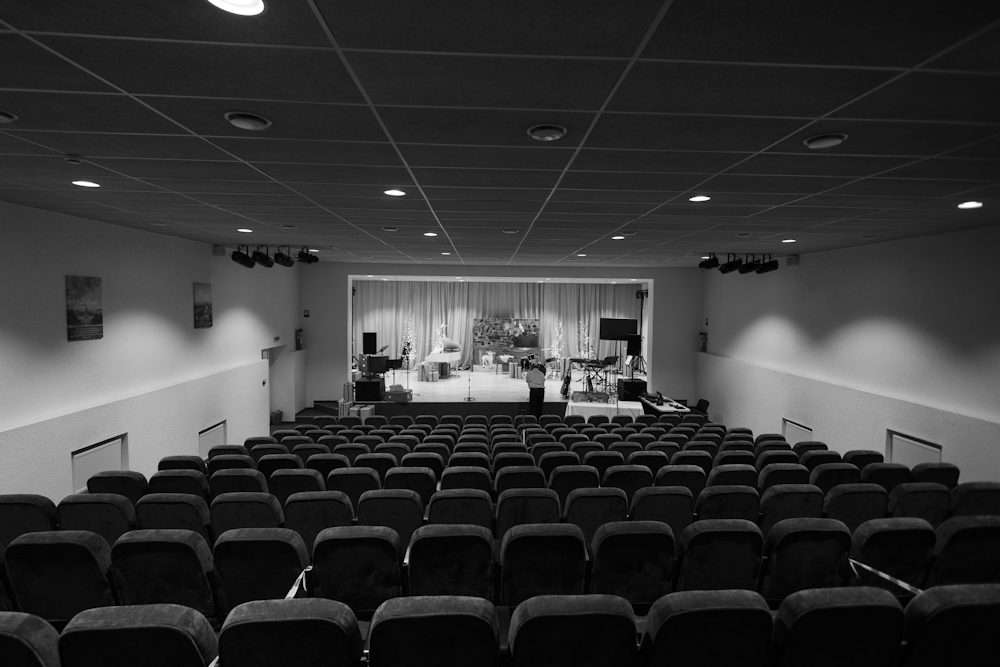
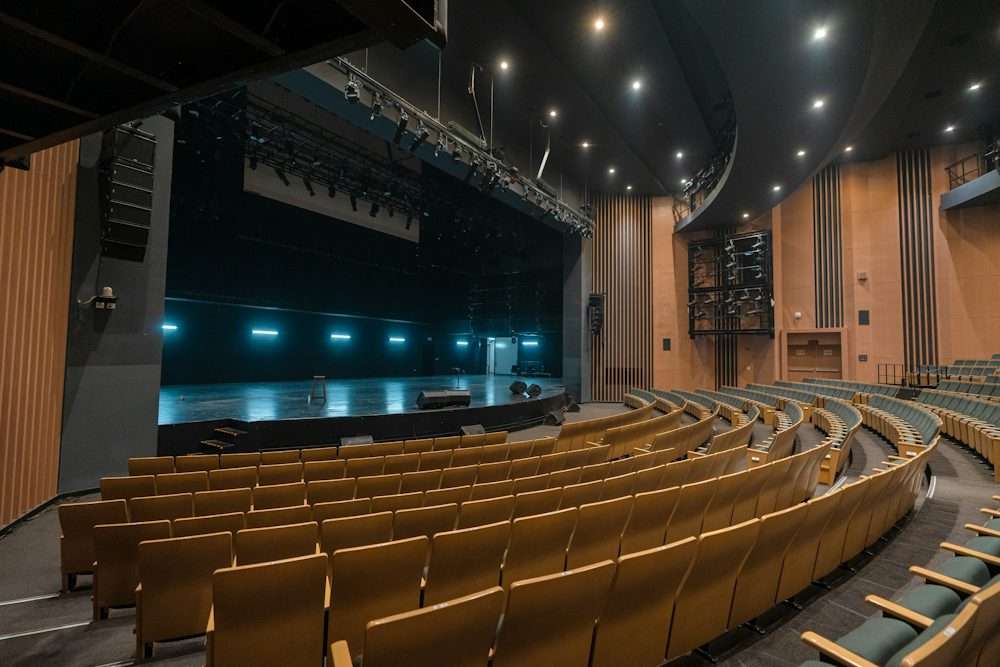
Goffman analyzed how people make situations comprehensible and maintain social performances before different audiences. Collins developed a theory of interaction rituals in which shared focus, shared mood, presence, and boundaries influence solidarity and emotional energy. These perspectives complement one another. Goffman helps us see the structure of the situation and the work of the participants. Collins directs our attention to how the interaction affects the participants’ sense of belonging, initiative, and engagement.
Situations and Roles
A social role consists of expectations associated with a position in a specific context. The role does not specify every action in detail. It defines a range of obligations, rights, and expected behaviors. The same person can be a colleague, friend, parent, student, patient, or citizen in different situations. Roles can facilitate coordination because participants develop certain expectations of what they can expect from one another.
A role should be distinguished from identity. A role is situational and relational: it gains meaning in relation to other roles and rules. Identity, more broadly, concerns how a person is understood and understands themselves over time and across contexts. A role can become very important to one’s identity, but they are not the same thing. Therefore, a person may also feel a sense of distance from a role they nevertheless perform.
Role conflict arises when different roles impose demands that are difficult to reconcile. Role overload refers to tensions within the same role, for example, when several legitimate expectations compete for time and attention. Role ambiguity means that expectations are unclear or contradictory. These distinctions are important in practice: a conflict between two responsibilities does not require the same kind of change as an unclear division of labor within a single responsibility.
Distinguish between role conflict, role overload, and role ambiguity
Purpose: To identify the type of role difficulty present in a specific situation.
Choose a situation where expectations are difficult to manage and list the roles involved.
List the expectations associated with each role and who expresses or upholds them.
Indicate whether the difficulty lies primarily between two roles, within a single role, or in the fact that the expectations are unclear.
Describe the resources, authority, and time constraints that affect the ability to meet the demands.
Formulate what kind of change would address the specific difficulty identified.
Afterward: Make sure you haven’t mistaken an organizational problem for a general shortcoming of the person in that role.
Limitations and when the exercise should not be done: In cases of abuse of power or unreasonable demands, it is not enough to simply improve one’s own performance in the role. The issue may need to be addressed at the organizational, union, or legal level.
Goffman: Performance and Audience
In *The Presentation of Self in Everyday Life*, Erving Goffman analyzed how people try to influence the definition of a situation that others can accept. He used the language of theater as an explicit sociological model: performance, audience, front region, back region, and team. The model does not mean that everyday life is literally a theater. It makes visible the work required to coordinate impressions and keep a situation comprehensible.
A performance is the part of a person’s activity that takes place in front of others and contributes to their understanding of the person and the situation. Impression management refers to attempts to influence which impressions become available. It does not necessarily involve deception. Selecting relevant information, maintaining a professional tone, or refraining from making every private feeling public can be necessary ways to sustain a shared situation.
Goffman’s analysis also shows that performances depend on the audience’s cooperation. Participants often overlook minor mistakes, help one another save face, and avoid openly questioning every contradiction. The situation is therefore a joint performance, even when participants have different levels of power. Some have a greater right to define what is happening, assess credibility, or demand accountability from others.
Compare the roles and audiences in two situations
Purpose: To explore how the same person adapts relevant information and behavior to different situations without interpreting every difference as insincerity.
Choose two everyday situations in which you play different roles or interact with different audiences.
Write down the common purpose and the formal or informal rules that apply in each situation.
Describe what information, tone, and degree of personal openness are relevant in each context.
Identify what constitutes a reasonable adaptation to the situation and what feels like a demand to hide something important.
Describe who has the greatest ability to define the situation and what consequences this has.
Afterward: Note whether the stress stems from the role change itself, from conflicting demands, or from an unequal right to determine what counts as appropriate.
Limitations and when the exercise should not be performed: The exercise should not be used to refine manipulation techniques or to coerce private information. It may be legitimate to maintain boundaries between roles.
Front and Back Regions
The front region is the part of a situation where a performance is presented to the current audience. There, participants often need to adhere to a specific definition of what the activity is. The back region is a context where parts of the performance can be prepared, corrected, or temporarily set aside. The regions are relational. A space is not always a front or back region; its function depends on which audience has access and what activity is taking place.
The back region does not represent a person’s true self. Even there, there are roles, norms, and other audiences. A team meeting can be a back region in relation to clients but a front region in the presence of the boss. Goffman’s point is that different situations require different ways of organizing information and behavior. When the boundary between regions is breached, participants may need to make a significant effort to restore the situation’s comprehensibility.
Digital communication makes region boundaries particularly clear. A message can be moved between audiences, a private comment can be saved, and different social contexts can be present at the same time. This does not mean that digital technology has eliminated roles. It has changed the ways in which people can distinguish between audiences and control how a performance is disseminated.
Explore the boundaries of a region
Objective: To see how access and audience influence the ability to prepare, recover, and coordinate a performance.
Choose an activity where there is a distinct audience and people performing the work.
Write down what the participants need to demonstrate in the front region for the activity to be understandable.
Write down where and with whom preparation, correction, or recovery can take place.
Describe how the boundary between the regions is maintained through location, time, technology, or access rules.
Describe the strain that arises if the back region is missing or is constantly subject to the demands of the front audience.
Afterward: Determine whether the problem primarily concerns personal privacy, work organization, technical access, or a combination of these.
Limitations and when the exercise should not be conducted: Do not map other people’s private spaces without their consent. The exercise concerns social conditions, not surveillance.
Teams and the Collective Performance
Goffman referred to a group of people collaborating on a performance as a team. The team does not need to be close-knit or equal. Its members are interdependent because one person’s action can either support or disrupt the shared definition of the situation. They therefore need to share certain information, assign tasks, and handle mistakes without every disruption becoming public in front of the audience.
The concept of a team highlights the often invisible coordination work behind a seemingly simple situation. Someone prepares, someone receives, someone corrects, and someone handles the consequences. If this work is distributed unevenly, the collective performance may appear seamless, while one or a few individuals bear a heavy burden. Interaction analysis must therefore ask who is doing the reparative and emotional labor.
Make a team’s coordination efforts visible
Purpose: To examine how several people collectively manage a situation and how the work is distributed.
Choose a recurring situation in which several people jointly interact with an audience, a customer, a group of students, a patient, or another recipient.
Write down what preparations are made before the visible part of the situation.
Describe who introduces the topic, explains it, corrects mistakes, eases tension, and follows up afterward.
Identify which tasks are formally recognized and which remain unseen.
Formulate a question about how responsibility, time, or recognition could be distributed more fairly.
Afterward: Note whether the stability of the situation relies on the same person repeatedly covering for others.
Limitations and when the exercise should not be done: The exercise should not be used to secretly evaluate colleagues. If a change is proposed, the people involved must be able to participate in the discussion.
Garfinkel: Norms Become Visible in How Order Is Established
Harold Garfinkel studied the methods people use to make everyday life comprehensible. Ethnomethodology, in this context, refers to the study of members’ practical methods for creating and recognizing social order. Norms are not merely rules set forth in a document. They come into play when participants interpret words, take turns in conversation, assume background knowledge, and treat certain actions as normal or deviant.
Garfinkel’s classic norm-breaking experiments often made the order visible by deliberately disrupting it. Such experiments can create discomfort, conflict, and involuntary exposure. Therefore, only open and non-disruptive observation is used here. It is sufficient to note how participants indicate that a rule exists: through pauses, glances, corrections, explanations, turn-taking, or reactions to deviations that have already occurred.
Observe an Implicit Rule
Purpose: To make everyday norms visible through low-intensity and non-intrusive observation.
Choose a public or everyday situation where you already have the right to be present.
Observe for no more than five minutes how people take turns, maintain distance, use eye contact, or signal when something is finished.
Write down three possible implicit rules that might explain what you saw.
Write down which specific observation supports each rule and what is still an interpretation.
Compare the rules with how the same type of situation is organized in another context you’re familiar with.
Afterward: Formulate the rules as preliminary descriptions, not as universal truths about people.
Limitations and when the exercise should not be done: Do not disrupt the situation, do not provoke reactions, and do not document identifiable individuals without their consent. Refrain from doing this in sensitive environments.
Interaction as a Sequence
An interaction can be analyzed as a sequence in which each action both responds to the previous one and sets the stage for the next. A greeting opens up the possibility of a response. A pause can be interpreted as reflection, resistance, or uncertainty, depending on the context. Meaning, therefore, does not lie solely in individual words. It emerges through sequence, tone, bodily orientation, and the participants’ shared knowledge of the situation.
This perspective differs from the habitus analysis in the previous chapter. Habitus helps us understand enduring dispositions that carry over across situations. Interaction analysis examines how a specific situation actually unfolds and how the participants respond to one another. These perspectives can be combined, but an event should not be explained by habitus when the sequence of the interaction provides a more direct explanation.
Interaction analysis can also reveal how agency is collectively distributed. A participant may raise a topic but needs others’ responses for the conversation to continue. A person may attempt to change the tone but lack the status or support necessary for the new direction to be accepted. The question is not merely what the individual intended, but which responses made further action possible or impossible.
Follow an Interaction
Purpose: To analyze how actions and responses shape a specific sequence of events.
Choose a brief, completed interaction in which you yourself participated and that can be described without exposing anyone.
Write down the key actions in chronological order: opening, response, next action, and conclusion.
Note which interpretations seem to have been shared and where the participants may have understood the situation differently.
Identify which actions opened up more response options and which ones limited them.
Describe how roles, status, or organizational rules influenced who was able to alter the course of events.
Afterward: Formulate a question about the interaction that is more specific than a general assessment of any participant’s personality.
Limitations and when the exercise should not be conducted: Do not recreate conflicts in detail if doing so increases anxiety or risk. The analysis does not provide certain insight into other people’s inner intentions.
Collins: Interaction Rituals
Randall Collins uses the term “ritual” in a broad sociological sense. An interaction ritual does not have to be solemn, religious, or planned. The concept describes situations where people gather, focus their attention on something in common, and are influenced by a shared atmosphere. A meeting, a conversation, a meal, a protest, or an everyday greeting can contain ritualized elements.
In Collins’s theory, a successful interaction ritual has four key conditions. The participants need some form of presence or mutual availability. There is a boundary separating the participants from those who are not participating. Attention is focused on a shared object or activity. Finally, the participants’ moods influence one another and may become more coordinated.
These conditions describe a process, not a checklist that guarantees a good outcome. According to Collins, when shared focus and mood reinforce one another, the ritual can foster group solidarity, symbols that take on shared meaning, moral sentiments toward the group, and emotional energy among the participants. If this coordination fails, the situation may instead feel empty, forced, or draining.
The boundaries surrounding a ritual can create a sense of belonging for participants and exclusion for others. Solidarity is therefore not automatically morally good. A group can be united around contempt, dominance, or an unjust order. Ritual analysis must distinguish between the process’s ability to create a sense of belonging and a normative assessment of what that sense of belonging is used for.
Examine the four conditions of a ritual
Purpose: To identify which aspects of a recurring interaction foster or hinder coordination.
Choose a recurring interaction in which you participate and that is not marked by acute conflict.
Describe the participants’ presence: Can they perceive and respond to one another, or is their attention divided?
Describe the boundary that separates the participants from non-participants and how it is maintained.
Describe what the participants’ attention is directed toward and whether they actually share this focus.
Describe how the atmosphere changes over the course of the interaction and whether the participants’ expressions become more or less coordinated.
Afterward: Identify which factor seems to have the greatest impact on whether the interaction is engaging, neutral, or draining.
Limitations and when the exercise should not be done: Do not demand enthusiasm from others, and do not interpret low energy as a lack of morale. Fatigue, stress, functional variations, and insecurity can affect participation.
Emotional Energy
Emotional energy is Collins’ term for a relatively lasting sense of security, initiative, drive, and anticipation that can follow a well-executed interaction ritual. It is not a medical measure of energy and is not the same as a temporary surge of emotion. A person can be calm yet have high emotional energy in this sense, because she leaves the situation with greater confidence and a willingness to act.
The concept describes how the outcome of an interaction can carry over to the next one. Experiences of successful coordination can make certain contexts more appealing and provide resources for continued participation. Experiences of failed coordination can make it harder to take the initiative. Collins thus describes chains of rituals: previous encounters influence which subsequent encounters people seek out, expect, and are able to participate in.
Emotional energy is distributed unevenly. People with higher status may receive more attention and have greater authority to define the focus. Others may do much of the work that keeps the interaction going without receiving commensurate recognition themselves. Furthermore, a group’s high energy may be built on the exclusion of someone. The analysis “ ” must therefore ask who is granted initiative and a sense of belonging, who gives more than they receive, and who is not counted as a full participant.
Track the emotional energy after an interaction
Purpose: To distinguish between a temporary feeling and the more lasting consequences described by Collins’s theory.
Choose three everyday interactions over the course of a few days. Choose situations that have already taken place.
Briefly describe how you felt immediately after each interaction without judging the feeling as good or bad.
Write about whether the situation increased or decreased your sense of security, initiative, and willingness to participate in a similar interaction later.
Write down which aspects of the interaction may have influenced the outcome: focus, responsiveness, status, boundaries, or atmosphere.
Compare the patterns and distinguish between what is an observation and what is an interpretation.
Afterward: Identify which type of interaction seems to be sustainable and which requires recovery or a change in conditions.
Limitations and when not to do the exercise: This exercise is not a mood test and should not become a form of constant self-monitoring. Stop if the exercise increases anxiety or performance pressure.
Examine who receives and who gives in a ritual
Purpose: To observe how attention, initiative, and reparative efforts are distributed among participants.
Choose a recurring group interaction that you are familiar with and can describe without publicly singling out individuals.
Note who most often sets the topic, receives responses, and is able to conclude or shift the focus.
Note who asks follow-up questions, defuses tension, includes quieter participants, or clarifies misunderstandings.
Note which participants have greater or lesser opportunities to leave the situation with a sense of initiative and recognition.
Identify what organizational or collective change would distribute the work and the exchange more fairly.
Afterward: Distinguish between the visible space for speaking and the less visible work that makes the interaction possible.
Limitations and when not to do the exercise: Do not hold individual people responsible for the entire group’s atmosphere. Emotional and restorative work should not automatically be placed on the person who is already doing the most.
Rhythm, Synchronization, and Shared Attention
Collins emphasizes that shared focus and a shared atmosphere can be strengthened through rhythmic coordination. Participants begin to respond with tighter timing, similar tempo, and increased attention to the same events. Synchronization does not mean that everyone does exactly the same thing or feels the same way. It means that their actions become sufficiently coordinated for a shared flow to emerge.
Rhythm can emerge in the turn-taking of a conversation, collaborative work, singing, movement, or recurring meeting formats. It can support participation by making it clearer when and how a person can contribute. It can also become controlling if only one pace or form of expression is allowed. An inclusive ritual must therefore be able to accommodate different ways of participating without losing its shared focus.
Adjust a condition for shared focus
Purpose: To try out a small, open-ended change in an existing interaction without requiring a specific feeling from the participants.
Choose a recurring interaction where you have the authority to suggest a simple change.
Identify whether the difficulty primarily involves divided attention, an unclear turn-taking order, a lack of presence, or an exclusionary boundary.
Choose a change that is visible and easy to agree to, such as a clearer turn-taking order, a shorter time frame, or a jointly defined focus.
Try the change once without demanding enthusiasm or gauging people’s personal feelings.
Evaluate whether participation became more understandable and whether more people were able to contribute under reasonable conditions.
Afterward: Keep, modify, or abandon the change based on the actual dynamics of the interaction, not on the expectation that rituals should always feel powerful.
Limitations and when not to do the exercise: Do not make the change in a group where you lack a mandate or where it might put someone at risk. Accessibility may require individual adjustments, not a single shared rhythm.
Ritual Chains and Recurring Sociality
A ritual chain consists of interactions whose consequences influence subsequent interactions. Symbols, expressions, and memories from previous encounters can reactivate the group’s sense of community. A recurring greeting, a specific way of beginning a meeting, or a shared activity can therefore reduce uncertainty and make participation easier. The effect lies not in the form alone, but in how the form has been linked to actual experiences of coordination.
Recurring rituals can also lose their effectiveness. If they continue out of a sense of duty without a shared focus, or if they evoke an unequal hierarchy, they can become draining. It is therefore not enough to simply repeat an activity. The analysis must examine whether the ritual’s participants, boundaries, focus, and atmosphere have changed, and whether the form still supports the shared purpose.
Examine a recurring ritual
Purpose: To see what sustains an everyday ritual over time and whether its form still serves the participants’ shared purpose.
Choose a recurring greeting, meal, meeting opening, activity, or other social practice that you already participate in.
Write down the shared focus that the ritual originally had or typically has.
Describe the symbols, words, places, or actions that connect a particular occasion to previous ones.
Describe whether the ritual currently provides coordination, a neutral routine, exclusion, or a burden for different participants.
Outline what should be preserved, changed, or discontinued, and who needs to be involved in that decision.
Afterward: Distinguish between the ritual’s recognizable form and its actual social consequences.
Limitations and when the exercise should not be done: A tradition has no right to continue if it involves coercion, humiliation, or exclusion. Affected participants must be able to opt out.
When the interaction continues after the meeting
An interaction does not always end when participants part ways. Comments, glances, and moods can continue to influence how a person interprets the next situation. Goffman’s perspective shows how threats to one’s face can lead to ongoing efforts to understand or restore a social impression. Collins’s perspective shows how low or high emotional energy can influence initiatives in subsequent encounters.
Aftereffects must, however, be distinguished from definitive explanations. A thought that resurfaces after a conversation does not prove what the other person intended. Instead, the analysis can ask which part of the sequence became unclear, which role requirement was activated, and what opportunity for repair was missing. This shifts the focus from unlimited interpretation of motives to the social situation that can actually be described.
Delineate the aftermath of an interaction
Purpose: To distinguish between what actually happened in an interaction and subsequent interpretations that need to remain open.
Choose a brief interaction that has continued to occupy your thoughts afterward.
Write only the observable sequence: words, actions, pauses, and conclusion.
Describe which role expectations or norms made the event significant.
Write your possible interpretations in a separate section and identify at least one uncertainty in each interpretation.
Determine whether the situation needs to be left as is, clarified in a conversation, or addressed through an organizational rule.
Afterward: Stop once you have distinguished between the event, the social rule, and the interpretation. Continued repetition does not automatically lead to greater certainty.
Limitations and when the exercise should not be done: Do not do the exercise in the event of threats, violence, or ongoing harassment. In such cases, protection, documentation according to relevant procedures, and support are needed before a conversation exercise.
Trying a Different Approach to Interaction
Interaction analysis can identify a small action that can be tried without holding the individual responsible for the entire situation. This might involve asking for a clearer order of turn-taking, formulating a shared focus, or explicitly stating a role expectation. Such an action is not a treatment with a guaranteed effect. It is a limited social experiment that can provide new information about the rules of the situation and the participants’ responses.
An experiment should take place where the risks are low and where other people are not used as unwitting test subjects. If the exercise is prepared with a trusted person or a professional support person, the role and wording can be made clearer. The key is to distinguish between what the person can change on their own, what requires cooperation, and what lies with an organization or institution.
Prepare a limited interaction experiment
Purpose: To translate an interaction analysis into a small, trackable action with clear boundaries.
Choose a low-intensity situation where you yourself have the right to change a limited aspect of your participation.
Write down which role, turn-taking pattern, or shared focus you want to make clearer.
Formulate a single action or statement that does not require others to disclose personal information or react in a specific way.
If needed, practice phrasing it with a trusted person or a professional support person.
Try it only if the situation feels safe, and afterward, write down what response you actually received.
Determine whether the next step lies with you, in a joint discussion, or at the organizational level.
Afterward: Evaluate clarity and consequences, not whether you succeeded in controlling the other person or creating a certain atmosphere.
Limitations and when not to do this exercise: Refrain from doing this exercise if there are threats, a significant power imbalance, or a risk of retaliation. This exercise does not replace professional support, workplace safety responsibilities, or other formal protections.
Bringing together roles, rituals, and emotional energy
The concept of “role” describes the expectations and rights associated with participants’ positions. Goffman’s performance analysis shows how the definition of a situation is maintained in front of an audience and how regions and teams organize this work. Garfinkel demonstrates how order is achieved through practical methods that participants often take for granted. Collins shows how focus, atmosphere, and boundaries can influence solidarity and emotional energy.
These concepts can be applied in a sequential order. First, the situation and the relevant roles are defined. Next, the concrete sequence and the implicit rules are examined. Then, the conditions of the ritual and how the exchange is distributed are analyzed. Finally, one asks what consequences the interaction has after the encounter and at what level change is possible. This sequence preserves the details of the interaction without reducing every problem to a matter of individual social skill.
Conduct a focused interaction analysis
Purpose: To bring together the concepts from this chapter in a testable analysis of a concrete situation.
Identify a brief situation and specify the participants’ roles, as well as who had the greatest authority to define what was happening.
Describe the central sequence of actions and an implicit rule that became apparent.
Describe the audience, setting, and any teamwork that influenced the performance.
Examine the ritual’s presence, boundaries, shared focus, and atmosphere.
Describe how initiative, recognition, and reparative work were distributed among the participants.
Conclude by identifying a reasonable level of change: one’s own actions, a shared conversation, or an organizational change.
Afterward: Verify that each concept explains a specific aspect of the situation and that the analysis remains confined to the chosen situation.
Limitations and when the exercise should not be conducted: The analysis is not a diagnosis of the participants. Refrain from analyzing vulnerable individuals who are unable to respond or give consent.
References
Archer, M. S. (1995). Realist Social Theory: The Morphogenetic Approach. Cambridge University Press.
Bourdieu, P. (1977). Outline of a Theory of Practice. Cambridge University Press.
Bourdieu, P. (1986). The Forms of Capital. In J. G. Richardson (Ed.), Handbook of Theory and Research for the Sociology of Education (pp. 241–258). Greenwood.
Bourdieu, P., & Wacquant, L. J. D. (1992). An Invitation to Reflexive Sociology. University of Chicago Press.
Collins, R. (2004). Interaction Ritual Chains. Princeton University Press.
Friedman, S. (2016). “Habitus Clivé and the Emotional Imprint of Social Mobility.” The Sociological Review, 64(1), 129–147. https://doi.org/10.1111/1467-954X.12280
Garfinkel, H. (1967). Studies in Ethnomethodology. Prentice-Hall.
Goffman, E. (1959). The Presentation of Self in Everyday Life. Doubleday.
Raudenbush, S. W., & Eschmann, R. D. (2015). Does Schooling Increase or Reduce Social Inequality? Annual Review of Sociology, 41, 443–470. https://doi.org/10.1146/annurev-soc-071913-043406