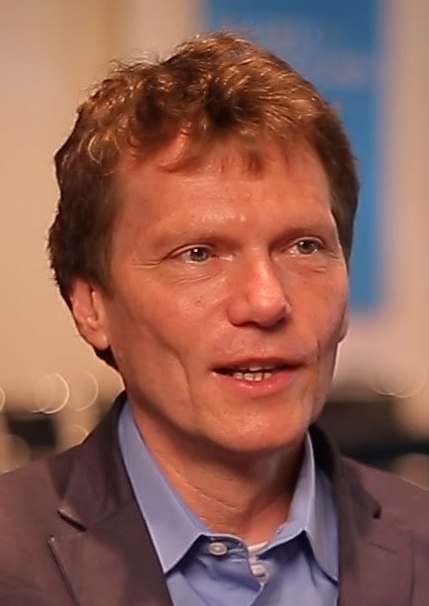
Rosa helps you understand why access, speed, and control alone do not create a good life. His concepts of acceleration, alienation, resonance, and uncontrollability describe how our relationships with people, activities, and the world can become vibrant or lifeless.

When More and Faster Still Isn’t Enough
Hartmut Rosa describes modernity through the lens of social acceleration. Technological acceleration makes transportation, production, and communication faster. The acceleration of social change means that rules, knowledge, relationships, and institutions change more frequently. The acceleration of the pace of life is evident when people try to perform more actions and have more experiences per unit of time.
The paradox is that time-saving technology does not automatically result in more free time. When the number of possible and expected activities grows faster than the rate at which they are performed, a continued shortage of time arises. The individual may then interpret the pace of society as personal inefficiency.
An acceleration analysis therefore does not merely examine how the calendar is used. It investigates which processes have become faster, what new demands have arisen, and who can set the pace. This can reveal why further optimization sometimes exacerbates the problem.
Conduct an acceleration analysis of an everyday area
Purpose: To determine whether time constraints are caused by increased demands and faster change rather than by poor individual planning.
Choose work, communication, care, consumption, or another specific area.
Note what has become faster as a result of technology or organizational changes.
Note which rules, knowledge, or expectations change more frequently.
Describe whether you’re performing more tasks per unit of time and whether you still feel pressed for time.
Choose a change at the right level: limit a workflow, coordinate with others, or address an organizational requirement.
Afterward: Acceleration is a societal dynamic. Individual planning can help, but it cannot alone solve a system where the volume and pace of change continue to increase.
Limitations and when not to do the exercise: Don’t turn this exercise into yet another optimization project. When work demands are unsustainable, organizational or union intervention is needed.
Resonance as a Relationship to the World
Rosa uses resonance to describe a particular relationship to the world. Something appeals to or moves the person. The person can respond with their own voice and capacity. In this encounter, both sides are transformed in the sense that the relationship has consequences for how the person acts and how the thing in question appears. At the same time, resonance cannot be guaranteed or fully controlled.
Resonance is therefore not the same thing as pleasure, harmony, or a strong emotion. A challenging book, a demanding conversation, or a sad piece of music can be resonant if the person feels moved by it and is able to respond. An intense consumer experience may lack resonance if it is merely consumed and left behind without a response or transformation.
Rosa describes relationships along different axes: to other people, to objects and activities, and to larger wholes such as nature, history, art, religion, or politics. For the good life, the question is not how everything can be made resonant, but which relationships can still speak and be answered.
Analyze a Real-Life Experience of Resonance
Purpose: To discern response, your own capacity, transformation, and uncontrollability in an experience that has actually moved you.
Choose a real-life situation in which a person, activity, place, idea, or aspect of nature moved you and you responded.
Describe what appealed to you or moved you without simply labeling the experience as “ ” or “positive.”
Write about how you were able to respond through your voice, body, thoughts, or actions.
Note whether the encounter changed how you viewed the situation or yourself.
Identify the conditions that made the encounter possible and what could not have been planned in advance.
Afterward: Resonance is a relationship in which both sides are affected in some way. This exercise helps you recognize the conditions for resonance without turning the experience into a product that can be ordered.
Limitations and when not to do the exercise: Do not use the language of resonance to romanticize harmful relationships. Being deeply moved is not in itself proof that something is good.
Alienation and the Silent World
For Rosa, alienation is a state of relationshiplessness. The world may be accessible yet remain mute: work is done without response, people become functions, and places become surfaces to pass through. The individual remains connected to the world in a practical sense, but the connection does not feel alive or responsive.
Alienation should not be reduced to a bad mood. It can arise in organizational structures where time constraints, goals, and evaluations leave no room for anyone to listen or be influenced. An organization can produce a great deal while both employees and beneficiaries feel that the relationship has become superficial.
Seeking resonance, therefore, does not mean chasing a feeling. It may involve regaining the opportunity for deeper engagement, meaningful responses, and active influence. Sometimes a personal shift in focus is required. Sometimes different working conditions, public spaces, or collaborative structures are needed.
Create a Resonance-Friendly Framework
Purpose: To increase receptivity and responsiveness without requiring a specific feeling.
Choose an activity or relationship that has at times been vibrant and meaningful.
Set aside a limited amount of time without parallel performance goals or constant monitoring.
Minimize a specific distraction that you can actually influence.
Approach the situation with a question or a focus of attention, not with the expectation that the experience must be intense.
Afterward, note whether you were able to hear a call, respond, and allow something to remain unresolved.
Afterward: A resonance-friendly mindset involves openness to being influenced and responding. It does not guarantee resonance, which is part of the concept’s essence.
Limitations and when not to do the exercise: Refrain if this openness makes you feel insecure in a harmful relationship. Boundaries and control may be necessary for safety.
Uncontrollability and the Limits of Planning
In *The Uncontrollability of the World*, Rosa describes a modern endeavor to make the world visible, accessible, controllable, and usable. These capabilities are of great value. The problem arises when everything that is important is also expected to be produced on demand. Love, inspiration, trust, learning, and resonance lose something when the outcome must be guaranteed.
Uncontrollability does not mean that planning is wrong. It signifies that an encounter with something real contains a response that does not come entirely from ourselves. We can create time, space, and attention, but we cannot command the other’s response or our own transformation.
This fosters a humble practice for the good life. One can work with the conditions for resonance while refraining from measuring every encounter by whether it produced the desired experience. A lack of resonance is not automatically a failure.
Try exercising less control in a limited area
Purpose: To explore the difference between necessary planning and a need for control that silences the world.
Choose a low-risk activity where you usually try to control every detail.
Determine the necessary parameters for time, safety, and responsibility.
Leave a small part open to others’ initiatives, the resistance of the material, or an unexpected turn of events.
Notice the impulse to regain full control and what happens if you wait.
Evaluate whether the openness led to a response, learning, or just unnecessary confusion.
Afterward: Uncontrollability is not an ideal of chaos. Rosa points out that a world treated entirely as graspable and controllable risks losing its ability to respond to us.
Limitations and when not to practice this exercise: Never reduce control over medication, finances, children’s safety, the risk of violence, or other areas where established routines protect people.