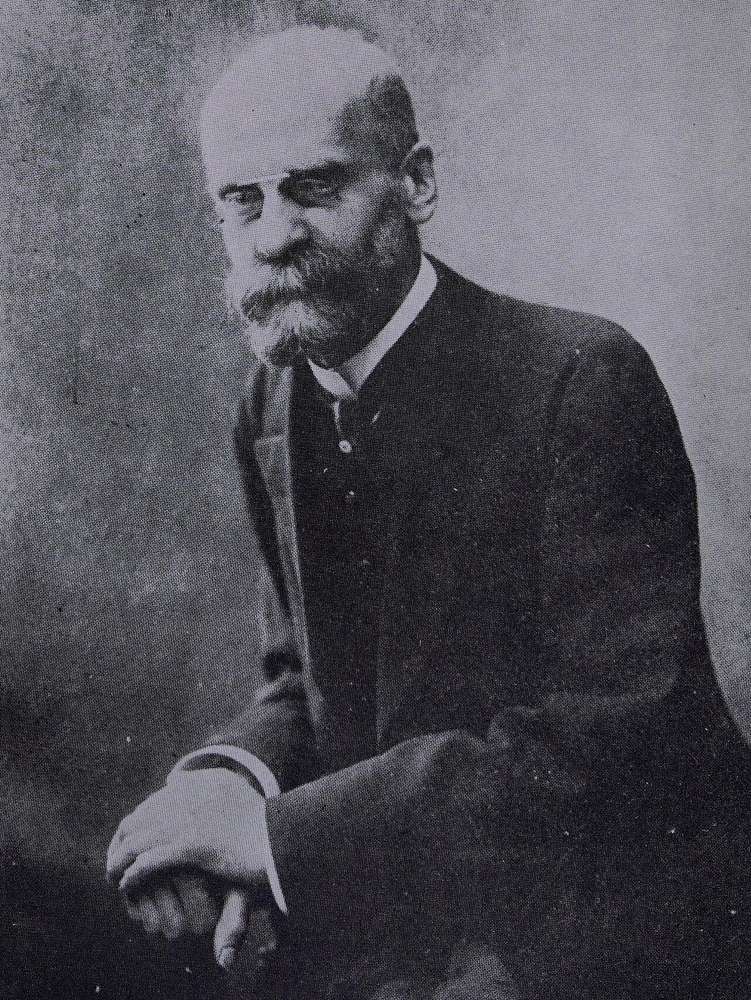
Émile Durkheim shows that people’s agency and suffering are shaped by social integration and regulation. We need bonds with others, but also boundaries for demands and desires. Too little or too much of either can become a problem. His sociology helps you examine how community, norms, and collective rituals support or burden a life.

Social facts and the external forces of everyday life
Durkheim uses the concept of social facts to refer to ways of acting, thinking, and feeling that confront the individual from the outside and exert a coercive force. Language, temporal structures, professional rules, and customs existed before the individual. They become visible when someone violates them and faces correction, surprise, or sanctions.
The social is not a fog hovering above people. It is maintained through institutions, material arrangements, and the actions of participants. A workday is social because many activities are coordinated around it and because deviations from it have consequences. At the same time, social facts change when enough actions, conflicts, and decisions reshape them.
For the good life, this concept provides a language for things that might otherwise seem like private quirks. A person may have difficulty resting because the workplace’s accessibility standards extend into their free time. This analysis does not absolve us of all responsibility, but it highlights which conditions need to be discussed collectively.
Make a social fact visible
Purpose: To identify a norm or order that governs everyday life without being explicitly stated.
Choose a recurring situation at work, in the family, in education, or in a public setting.
Describe what participants normally do and what is taken for granted.
Note the reactions that follow when someone deviates from the norm, including subtle glances, jokes, or delays.
Identify which organizations, technologies, or physical arrangements support this order.
Determine whether the order should be preserved, negotiated, or changed, and who can do so.
Afterward: A social fact is not immutable. When its enforcers and sanctions become visible, it becomes possible to assess where change can actually occur.
Limitations and when not to do the exercise: Do not commit a disruptive breach of norms just to provoke reactions. Be mindful of existing situations and protect other people’s privacy.
Integration and Regulation
Integration is about how people are bound to groups, relationships, and shared purposes. Regulation concerns how desires and actions are limited by norms and legitimate expectations. Durkheim’s point is not to maximize both. Too weak bonds can lead to isolation, while too strong bonds can silence one’s own voice. Too little regulation can create boundless demands, while overregulation can make life feel confined.
The balance is socially distributed. One person may be heavily regulated at work while lacking a supportive community. Another may belong to a close-knit group that places unreasonable demands on loyalty. Therefore, integration and regulation must be assessed separately and in every area of life.
The good life requires relationships in which a person is both able to participate and raise objections. It requires boundaries that make the pursuit bearable, but which can be justified and renegotiated. Community without freedom and freedom without social support are both incomplete solutions.
Map out integration and regulation in one area of life
Purpose: To distinguish a lack of belonging from a lack or excess of reasonable boundaries.
Choose an area of life where you repeatedly feel support, pressure, emptiness, or confinement.
Describe which people and groups provide a sense of belonging and which bonds are missing.
Write down the rules and expectations that limit demands, time, and behavior.
Assess whether the integration or regulation is too weak, adequate, or too strong.
Choose a change at the right level: strengthen a bond, establish a boundary, renegotiate a norm, or seek a different environment.
Afterward: The two dimensions may point in different directions. More community does not always solve overregulation, and greater freedom does not always solve loneliness.
Limitations and when not to do this exercise: Do not use this map to remain in a controlling or abusive group. Safety and qualified support take precedence over attempts to improve integration.
Anomie and the Limits of Desire
Durkheim uses the term “anomie” to describe a state in which social regulation is weakened or no longer fits the social conditions. Expectations then lack a stable yardstick. Rapid economic or social change can blur previous boundaries, both during crises and in the face of sudden success.
Anomie is not merely the absence of rules. It is a lack of credible orientation. If it is always possible to compare oneself to those above and no goal specifies what is sufficient, progress becomes difficult to perceive as complete. Markets, careers, and digital metrics can make opportunities visible without providing a reasonable limit on what life demands.
A Durkheimian practice therefore sets limited goals and shared standards. The limit is not meant to stifle ambition, but to make the pursuit assessable and compatible with other values. Determining what is enough can be a social conversation rather than a solitary decision.
Set a socially grounded limit for a goal
Purpose: To make a pursuit finite and compatible with other aspects of the good life.
Choose a goal that tends to shift further away as you get closer to it.
Write down which comparisons, metrics, or expectations keep the goal open-ended without an endpoint.
Determine what would count as sufficient over a defined period.
Discuss the balance with a trusted person in terms of care, health, relationships, and other obligations.
Decide when the goal should be reassessed and what must not be sacrificed to achieve it.
Afterward: A boundary creates an opportunity to conclude, appreciate, and refocus. It needs to be legitimate and open to reassessment, not arbitrarily strict.
Limitations and when this exercise should not be done: Do not set goals related to medical treatment, finances, or the rights of others without relevant knowledge and discussions with those involved.
Collective Exaltation and Ritual
In his sociology of religion, Durkheim described how communal gatherings can create collective elation. When people come together, focus their attention on shared symbols, and act in unison, the group can experience a force greater than the individual’s everyday state. At the same time, the experience reaffirms the group’s values and bonds.
This concept applies not only to religion. Holidays, demonstrations, sports games, concerts, and communal ceremonies can create similar intensity. But strong community is not automatically a good thing. Rituals can also make obedience and exclusion emotionally compelling.
For a good life, the question is which recurring forms bring valuable relationships and commitments to life. A functioning ritual requires participation, comprehensible meaning, and a place for those involved. It cannot be replaced by an activity that merely appears communal from the outside.
Revive a Shared Ritual
Purpose: To create a recurring practice that strengthens a valuable bond without coercion.
Choose a relationship or group where a shared value exists but rarely takes on a clear form.
Ask the participants what recurring activity previously fostered presence or a sense of belonging.
Design a simple ritual with a clear beginning, a shared focus, and an opportunity for everyone to contribute.
Try it out once without expecting strong emotions or perfect participation.
Follow up to see if the ritual increased a sense of belonging, created pressure, or needs to be modified.
Afterward: The quality of the ritual is evident in the participants’ actual experience and continued bonds, not in how solemn it appears.
Limitations and when the exercise should not be done: Avoid rituals that require confession, humiliation, financial sacrifice, or loyalty that participants cannot freely renounce.