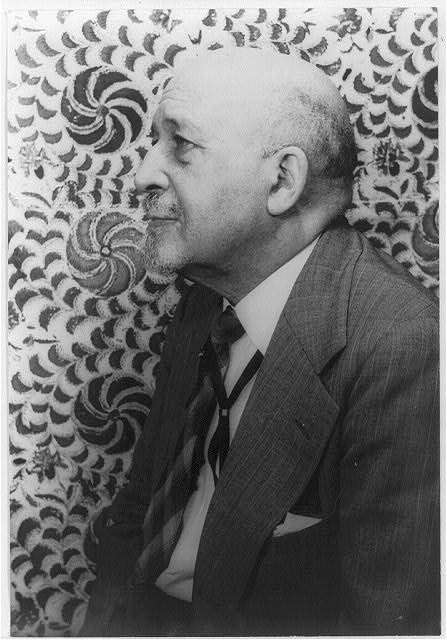
W. E. B. Du Bois combines empirical sociology, historical analysis, and a language for describing how racism becomes a lived experience. The color line structures institutions and life chances. The veil and the double consciousness describe how the racialized gaze can penetrate one’s self-understanding. At the same time, his work demonstrates that sociological knowledge can be used for democratic transformation.

The Color Line as a Social Order
Du Bois describes the color line as a fundamental division of modern society. It is not merely a matter of individual prejudices. It is shaped by housing, work, education, the right to vote, violence, associations, and the categories that determine who is granted full membership. The line may be legally defined or maintained through the allocation of resources and everyday decisions.
In *The Philadelphia Negro*, Du Bois combined surveys, statistics, interviews, and historical knowledge to explain the conditions in Philadelphia’s Seventh District. His method broke with explanations that attributed poverty and ill health to supposed racial characteristics. He demonstrated how the labor market, discrimination, housing, and history must be included in the analysis.
For the good life, this means that individual experiences must be connected to institutional geography. The question is not merely whether someone encounters a hostile remark, but how access, risk, and resources are distributed along a racialized boundary. The analysis must be based on evidence and must not itself reproduce categorization or surveillance.
Map an institutional color line
Purpose: To investigate whether access and resources differ between places or groups without profiling individuals.
Choose a specific area such as education, housing, employment, or public services.
Gather public and aggregated information on access, resources, wait times, or outcomes.
Compare the formal principle of equal treatment with the patterns revealed by the data.
Examine which historical decisions, selection rules, or geographic boundaries may contribute to the disparity.
Formulate a question or proposed change directed at the institution that has the mandate and the data.
Afterward: The map should shift the explanation from assumed group characteristics to the processes that determine life chances.
Limitations and when the exercise should not be done: Do not record individual people’s ethnicity or skin color. Use legal, public, and aggregated data, and avoid conclusions that the data does not support.
The Veil and Double Consciousness
The veil describes a social boundary that renders the Black experience partially invisible to the white world while simultaneously forcing Black people to feel the gaze of the dominant world. Double consciousness refers to the tension of seeing oneself both through one’s own experience and through a society that devalues one.
The concept is not a general synonym for having multiple roles. It is tied to a specific historical and racialized order. At the same time, it provides a sharp way of articulating how power can require a person to constantly anticipate the dominant group’s interpretation. This gaze can influence language, the body, ambition, and the sense of belonging.
For the good life, the goal is not to force a single identity. It is to distinguish self-knowledge from an imposed valuation and to create relationships and institutions where the individual can emerge as a full participant. For those who belong to a dominant group, the task is to examine the gaze and the demands produced by their own environment.
Distinguish Your Own Experience from the Imposed Perspective
Purpose: To see how a dominant narrative influences self-presentation and scope for action.
Choose a situation in which you or an affected person needs to anticipate how a social category will be interpreted.
Describe the lived experience using words that do not reflect the dominant group’s judgment.
Write down what assumptions or risks the outside perspective brings to the situation.
Identify what adjustments are required and what they cost in terms of energy, voice, or opportunity.
Choose a relational or institutional change that reduces the need for this double surveillance.
Afterward: The exercise is intended to make the social gaze visible, not to require the vulnerable person to explain or prove their entire identity.
Limitations and when the exercise should not be done: Do not conduct the exercise in public without consent. If you are not personally vulnerable, analyze the demands of the environment and your own responsibility; do not borrow someone else’s experience.
The dual perspective as sociological knowledge
Du Bois shows that a position on the margins can provide insight into both sides of the social order. Someone who must understand the dominant institution while simultaneously seeing what that institution fails to understand about her can uncover contradictions that the center overlooks. This alternative perspective has sometimes been called “second sight.”
This does not mean that vulnerability automatically yields complete or infallible knowledge. Experience needs to be processed, compared, and connected to history and data. But institutions that exclude the knowledge of those affected lose an important source of understanding of their own operations.
Democratic knowledge-building therefore requires comparing self-descriptions with experience and outcomes. An organization may call itself open, while certain participants must work much harder to be believed. This difference is sociological in nature—not merely a communication problem.
Compare the institution’s self-image with experience and outcomes
Purpose: To use multiple knowledge positions to identify a contradiction within an organization.
Choose an institution with a stated goal of equity, access, or representation.
Gather its public self-description and the rules intended to achieve the goal.
Review voluntarily shared experiences from those affected and relevant aggregated statistics.
Identify where self-perception, experience, and outcomes align or differ.
Formulate a change that incorporates marginalized knowledge into decision-making and follow-up.
Afterward: When multiple sources of knowledge are brought together, the contradiction becomes more precise and harder to dismiss as isolated misunderstandings.
Limitations and when the exercise should not be conducted: Do not pressure people to share their experiences of vulnerability. Use experiences that have already been voluntarily shared, or create safe spaces with clear consent.
From Abolition to Democratic Reconstruction
In his historical analysis of post-slavery reconstruction, Du Bois shows that freedom requires more than the abolition of formal bondage. Education, work, political power, and protection must be institutionally built. Without such positive conditions, old forms of domination can resurface in new guises.
This idea can be described as democratic reconstruction: removing a barrier while simultaneously creating the institutions that make genuine participation possible. A door that is formally opened is of limited help if people lack information, time, financial resources, or protection against reprisals.
For the good life, this shifts the focus to the follow-up work. When an unjust rule is removed, we must ask what capabilities, organizations, and safeguards are missing. Freedom becomes sustainable when people can exercise it collectively and defend it through shared institutions.
Plan the institution that must follow after an abolition
Purpose: To complement the removal of a barrier with positive conditions for participation.
Choose a rule, habit, or barrier that a group wants to remove.
Describe the specific form of lack of freedom or domination that the barrier creates.
Imagine that the barrier disappears tomorrow and list what resources or protections are still missing.
Identify what organization, funding, training, or decision-making authority needs to be established.
Formulate an initial step toward rebuilding, including the responsible party and a follow-up plan.
Afterward: Dismantling and rebuilding are two distinct tasks. The latter determines whether the new freedom can be utilized and defended.
Limitations and when the exercise should not be conducted: Do not build the solution without the participation of those affected. Avoid making promises that lack a mandate, resources, or long-term accountability.