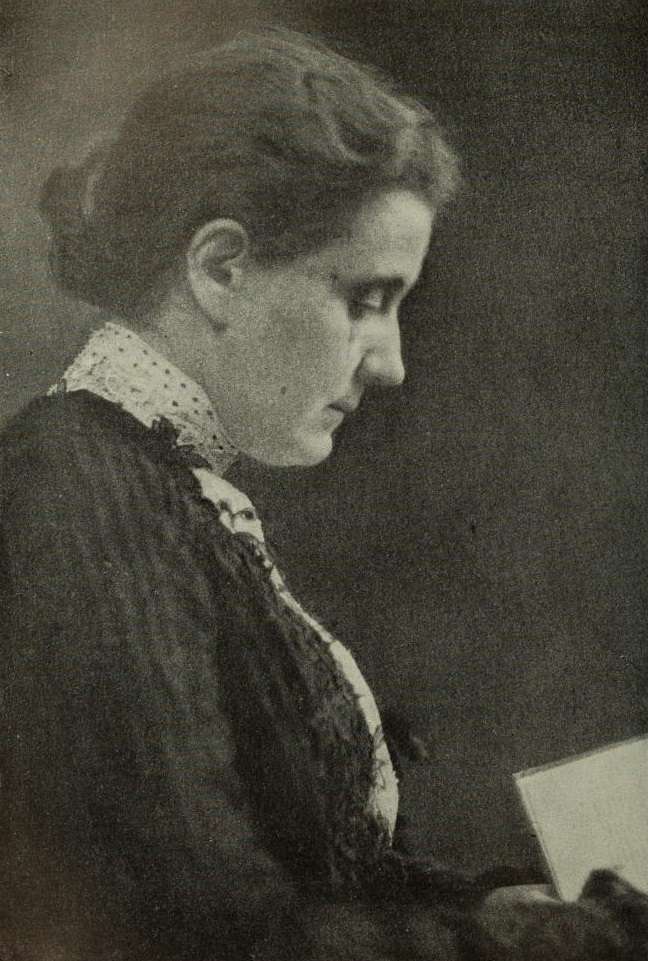
Jane Addams combines sociological inquiry with social action. At Hull-House, education, culture, care, organizing, and research were developed together with people in Chicago’s immigrant neighborhoods. Addams views democracy as a lived social ethic: people need to come together, learn from one another’s experiences, and build institutions that make communal life possible.

Social Ethics and the Democratic Experience
In *Democracy and Social Ethics*, Addams argues that morality cannot be limited to individual charity or private intentions. An industrialized and interdependent society requires a social ethic in which decisions are tested against the experiences of others and against the institutions that shape their opportunities.
Democracy is therefore more than elections and formal rights. It is an experience in which people from different positions participate in a shared life and acknowledge one another’s knowledge. Otherwise, those who help from a distance can retain the power to define both the problem and the solution.
For the good life, this means that care and citizenship are united. An action is not good simply because it is well-intentioned. It must be shaped in collaboration with those affected and contribute to relationships and institutions where more people can act as equal participants.
Make a helpful idea more democratic
Purpose: To shift an initiative from being done for people to being designed and owned together with them.
Choose a specific idea for helping, improving, or organizing something in a setting you’re familiar with.
Write down who has so far been allowed to define the problem, the goal, and what counts as success.
Identify which relevant experiences and resources are not yet included in the design.
Create a framework where stakeholders can modify the plan, assign responsibilities, and say no.
Determine how decisions, resources, and lessons learned will be shared if the experiment continues.
Afterward: A democratic intervention does not only change the recipient. It also changes the relationship, the decision-making process, and the person who initially set out to help.
Limitations and when not to do this exercise: Do not begin work with a vulnerable group without an invitation, local knowledge, and clear accountability. Good intentions do not replace consent or expertise.
Proximity, Knowledge, and Hull-House
Hull-House was a settlement where Addams and many others lived and worked in an area characterized by migration, low wages, and inadequate public services. Its activities included education, childcare, culture, union organizing, and studies of work and housing. Knowledge and practical work developed side by side.
Proximity did not mean that differences in class and power disappeared. But it made it harder to cling to abstract images of people as passive recipients. Problems could be identified through everyday contact, and solutions could be adjusted based on the residents’ reactions and initiatives.
Addams’ work shows that social knowledge requires places where people meet over time. One-off consultations do not provide the same understanding of rhythms, interdependencies, and local resources. At the same time, closeness must be combined with respect for privacy and an awareness of who still controls money and institutions.
Create a local map of resources and barriers
Purpose: To view an environment through the lens of both problems, existing capacities, and opportunities for collaboration.
Choose a small geographic area or a clearly defined community.
Map public services, organizations, meeting places, and informal networks that already support daily life.
Identify a specific obstacle that several stakeholders are trying to solve individually.
Talk with those involved about what resources the map is missing and what kind of collaboration would be helpful.
Formulate an initial joint step that utilizes an existing resource rather than replacing it.
Afterward: A social map should show capacity and relationships, not just shortcomings. It can become a foundation for collaboration when those mapped are given a say in how it’s used.
Limitations and when not to conduct the exercise: Do not publish sensitive locations, personal information, or informal support networks that could put people at risk. Ask for consent before sharing.
Perplexity as the Starting Point for Inquiry
Addams returns to moral perplexities: situations where established duties and simple principles are insufficient. The interdependencies of industrial society mean that a well-intentioned action can have far-reaching consequences, and people’s experiences can reveal conflicts for which one’s own moral framework lacks the language to describe them.
Perplexity is not the same as passive uncertainty. It becomes productive when the person lingers with the contradiction, seeks out the experiences of others, and examines the institutional conditions. The moral question deepens from “What should I do?” to “How have our relationships been organized so that the alternatives look like this?”
For the good life, perplexity provides a discipline against moral self-assurance. It makes it possible to change both one’s understanding and the way things are organized without abandoning the value that raised the question. The goal is better action, not preserving the image of one’s own goodness.
Transform a moral perplexity into a shared inquiry
Purpose: To use a real contradiction as a starting point for learning and change.
Choose a situation where two reasonable obligations or values clash and a simple rule isn’t enough.
Describe the contradiction without immediately labeling anyone as “bad” or taking sides.
Ask what experiences and institutional conditions are missing from your initial picture.
Seek a conversation or background information that makes the conflict more concrete and clearly outlines the consequences.
Formulate a tentative course of action and identify what you need to learn before making the next decision.
Afterward: Perplexity becomes useful when it leads to a better question, a broader foundation of experience, and a testable next step.
Limitations and when not to do this exercise: Do not use investigation as an excuse to delay protection against ongoing harm. Certain boundaries and rights must be secured first.
The Sociological Experiment
Addams’ work was experimental in a practical and democratic sense. New initiatives were developed to address concrete problems, implemented in everyday life, and modified as experience dictated. The experiment was not a laboratory manipulation of people but a collective effort to create better institutions.
Such an experiment starts small enough to be manageable but addresses a real social condition. It has a clear vision of what needs to change, draws on local knowledge, and establishes mechanisms for feedback. Failures are treated as learning opportunities, but participants must not bear the risks associated with someone else’s learning.
For the good life, the experiment combines analysis and action. People do not need to wait for a complete theory before something is tested, but they should be able to account for what was done, who was affected, and how the next version will change. Sociological wisdom is built in the recurring cycle between experience, shared interpretation, and institutional improvement.
Conduct a small democratic social experiment
Purpose: To test a collectively designed change and learn from its social consequences.
Choose a specific everyday problem that the group wants to change.
Work together to define what the experiment should change and what must not be put at risk.
Allocate decisions, work, and resources so that those affected have real influence.
Conduct the experiment for a set period of time and gather simple feedback from multiple perspectives.
Decide collectively whether the experiment should be ended, modified, or incorporated into a more permanent institution.
Afterward: The experiment is successful if it yields useful knowledge and improves collective capacity for action, even when the initial solution must be abandoned.
Limitations and when the exercise should not be conducted: Do not experiment with people’s basic security, healthcare, livelihood, or rights. Participation must be voluntary, and risks must be reasonably distributed.